



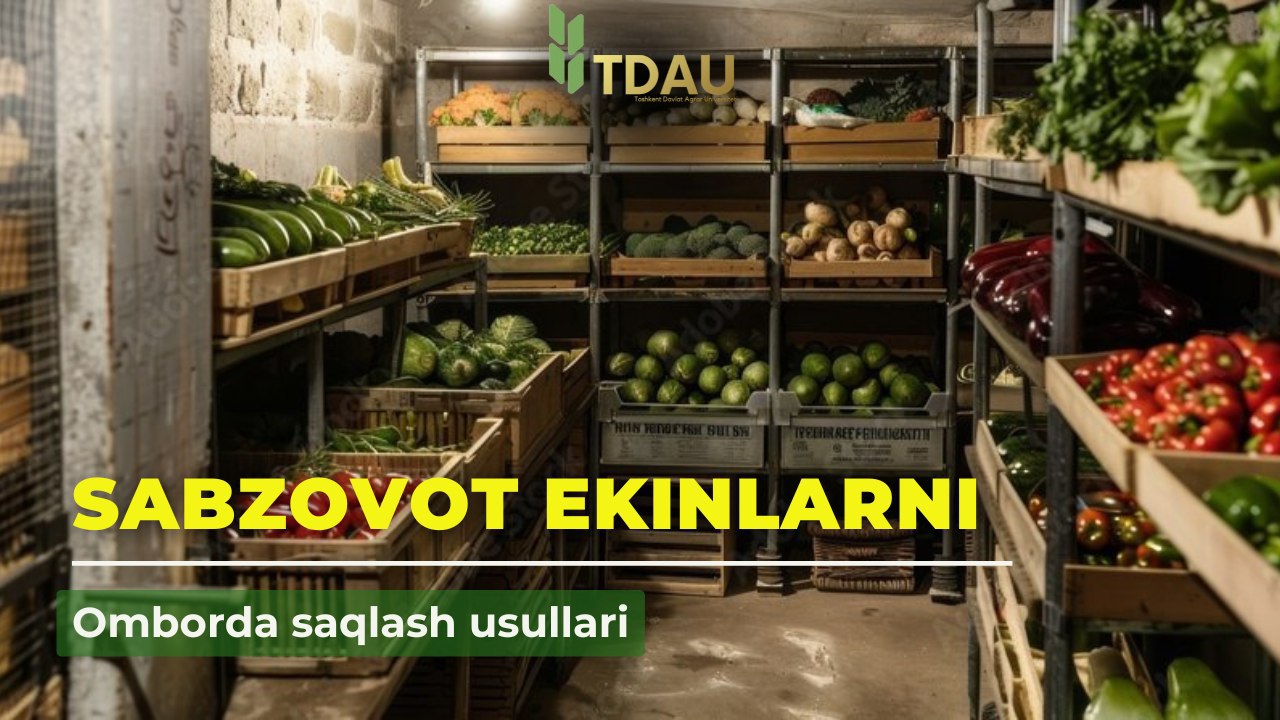
The following methods can be applied to preserve vegetables in storage:
Ensuring optimal conditions
Temperature: Provide the suitable temperature for each type of vegetable. For example:
Potatoes: +2…+4°C
Carrots: 0…+1°C
Onions: 0…+3°C
Humidity: The relative humidity of the air should be 80–90% (for onions and garlic, slightly lower – 60–70%).
Ventilation: A proper ventilation system is necessary to ensure good air circulation. This prevents rotting and mold growth. Proper preparation and storage Sorting: Remove any spoiled, damaged, or diseased vegetables. Drying: Vegetables should be dried before storage, especially onions and garlic. Preparation: Place potatoes in bags or containers to protect them from light. Natural materials: Using wood ash can be an effective way to prevent vegetable spoilage. Chemical agents: Special antifungal preparations (e.g., biofungicides) can be used during storage to protect against diseases.
Storage system Racks: Store vegetables on racks or in crates, keeping them off the floor (at least 15–20 cm high). Separation: Store different vegetables separately (for example, potatoes should not be stored next to onions). Regular inspection Regularly check vegetables in storage and remove any spoiled or diseased products. This prevents diseases from spreading to other vegetables. By applying these methods, vegetable crops can be stored for a long time while maintaining their quality.
Social networks: