



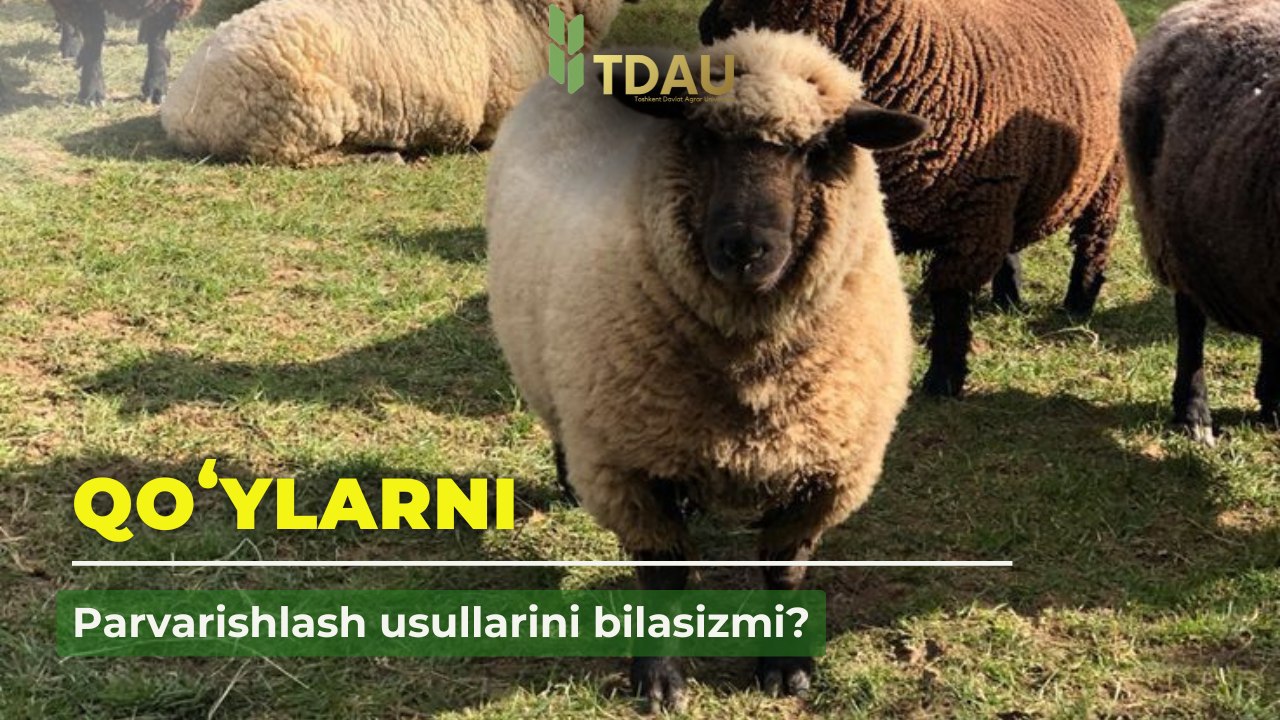
Jaydari Breed Sheep: This is a meat-fat breed with coarse wool and a fat tail, adapted to pasture and rural conditions. The breed is unpretentious to pastures and does not quickly lose its fatness. Sheep reach sexual maturity at 5–7 months. They are put to mating at 15–18 months. Estrus lasts 145–155 days. Usually, one or two lambs are obtained. Rams weigh 60–180 kg, ewes — 35–110 kg. Dressing percentage is 45–60%. Sheep wool is sheared twice a year — in spring and autumn. Wool yield is 1–4 kg and is used for making thick cloth, blankets, carpets, and felt. They produce up to 50 kg of milk per year with 6–7% fat content. Hisori Breed Sheep: They are rapidly bred in both farms and household plots, as this breed is very suitable for keeping in one place and is well adapted to local conditions.
Sheep Care: In the sheepfold, 1.5 m² is allocated per ewe, 1 m² for young sheep, and 2 m² for an adult ram. Each sheep receives 200–300 g of mixed feed daily, 1 kg of chopped hay, vegetable waste, maize silage, haylage, straw, and necessary salt.
In winter, each sheep receives 0.5 kg of chopped hay per day regardless of fatness. Special attention is given to pregnant ewes: one month before lambing, they are fed 0.4 kg of mixed feed daily.
The sheep-breeding sector is one of the leading branches of livestock farming in our republic. Breeds raised include Karakul, Hisori, Jaydari, and Jundor. In summer, sheep should be provided with conditions that reduce heat stress and thirst. Sheep are grazed on open plains, hills, and highlands. Young ewes get the best pastures. Grazing is done in the morning and evening, while during the hottest hours, sheep rest in open, wind-ventilated areas to prevent overheating and respiratory diseases that may appear in winter.
Source: agro_uz
Social networks: