


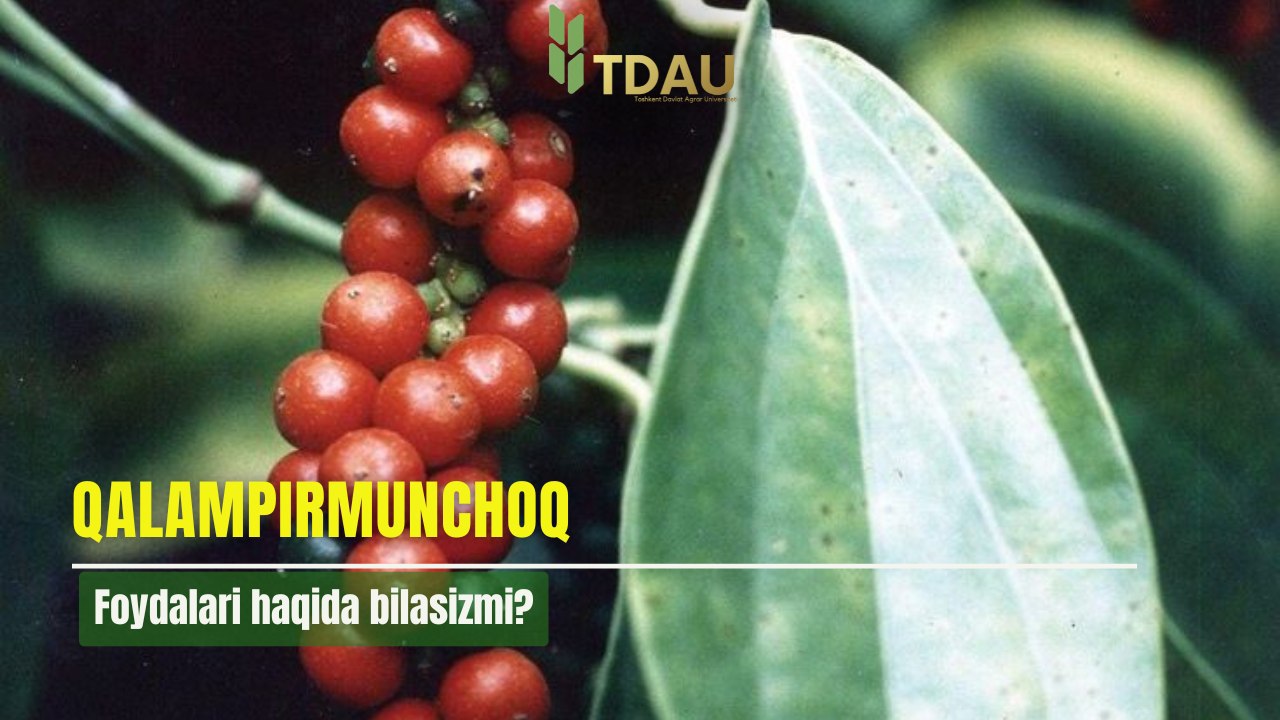
Black pepper (Piper nigrum) is not only an indispensable spice in our kitchen, but also a highly valuable plant in terms of medicinal and economic importance. Since ancient times, this plant has been called the “King of Spices.” Black pepper improves digestion, strengthens the immune system, activates blood circulation, and is beneficial in treating colds.The natural compounds contained in black pepper accelerate met abolism and help eliminate excess weight. In addition, it has antibacterial properties and protects the body from harmful microorganisms. In agriculture, black pepper is considered a high-income and export-oriented crop. It is cultivated on relatively small areas, yet it can produce yields for 20–25 years, providing farmers with a stable source of income. It is in constant demand in the pharmaceutical and spice industries. Black pepper prefers a warm and humid climate. It grows well in fertile, loose, and well-drained soils. It is mainly propagated through cuttings and requires support structures for climbing growth. Irrigation should be moderate, and the use of organic as well as potassium-phosphorus fertilizers is recommended. The plant begins bearing fruit after 3–4 years. The fruits are harvested when they turn red, then dried to obtain high-quality black pepper.
Social networks: