


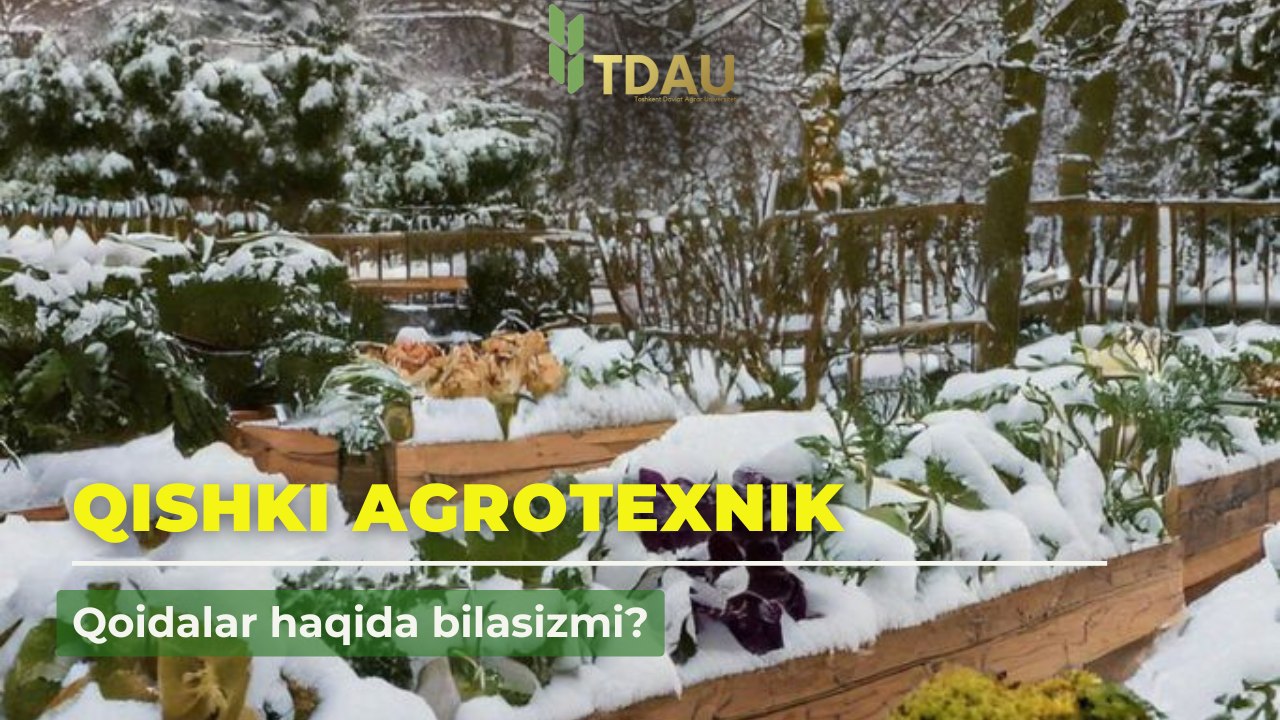
The winter period is considered a crucial stage for preserving crops, improving soil fertility, and laying the foundation for the future harvest. Strict adherence to winter agrotechnical practices helps prevent crop damage from cold and ensures high productivity.
Preparing Autumn Crops for Wintering
Winter wheat and barley crops should have developed 3–4 true leaves before entering the winter period. Crops must be adequately nourished; excessive application of nitrogen fertilizers in late autumn is not recommended.
Field leveling should be checked, and areas where water may accumulate must be eliminated.
Soil and Moisture Conservation Measures
Snow retention practices (opening small channels, forming ridges) help conserve moisture. During winter, machinery traffic in fields should be avoided, as it leads to soil compaction.
On saline soils, winter leaching measures are carried out.
Protection from Cold and Frost
Seedlings with exposed roots should be covered with soil or mulched. During severe frosts, maintaining a snow cover over crops is considered beneficial.
In windy areas, barriers are installed to prevent snow from being blown away.
Prevention of Diseases and Pests
Fields and orchards should be regularly monitored during winter. Dried and diseased plant residues must be removed.
The trunks of fruit trees are whitewashed with lime to protect them from pests.
Fertilization and Care During Winter
Applying phosphorus and potassium fertilizers before or during winter improves soil fertility.
Organic fertilizers (well-rotted manure) are recommended to be applied together with autumn plowing.
Winter irrigation is carried out only when necessary.
Social networks: