



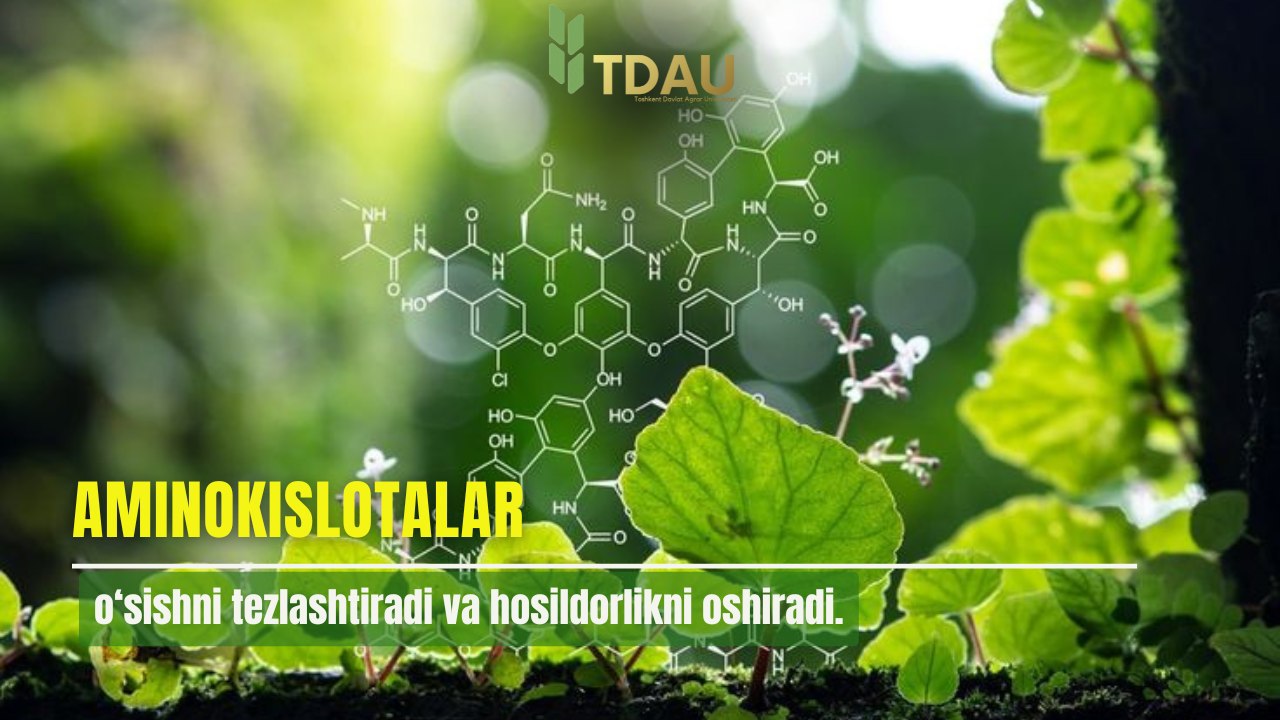
Amino acids are the building blocks of proteins and play a crucial role in plant growth and development. Some important amino acids cannot be synthesized independently by plants, which requires them to be obtained from external sources.
Importance in plant growth
Amino acids are the main components of proteins. They participate in photosynthesis, enzyme functions, and structural components, contributing to the overall growth of plants.
These substances increase the efficiency of nutrient transport systems in plant roots, making it easier to absorb essential nutrients.
They are involved in stress response, helping plants overcome unfavorable environmental conditions such as drought, high temperatures, and pest attacks.
Amino acids are an integral part of the photosynthesis process, as they are necessary for the synthesis of chlorophyll and other photosynthesis-related proteins.
Types of important amino acids
Methionine: Supports root development, nutrient uptake, and overall growth.
Leucine: Very important for regulating protein synthesis and contributes to plant resistance to stress factors such as drought and pests.
Lysine: Necessary for enzyme formation, photosynthesis, and overall plant health.
Valine: Required for cell elongation and expansion, helping plant growth and development.
Threonine: Required for cell wall formation and protein synthesis, supporting leaf development and the overall condition of the plant.
Sources of amino acids for plants
Amino acids may be present in the soil as a result of the decomposition of organic matter, including plant residues, animal remains, and microorganisms. Plant roots are able to absorb these amino acids.
In addition, many fertilizers contain amino acids or protein hydrolysates, which are direct sources of essential amino acids for plants.
It can be said that plants are able to recycle amino acids obtained from old tissues to support new growth during periods of nutrient deficiency.
Social networks: