



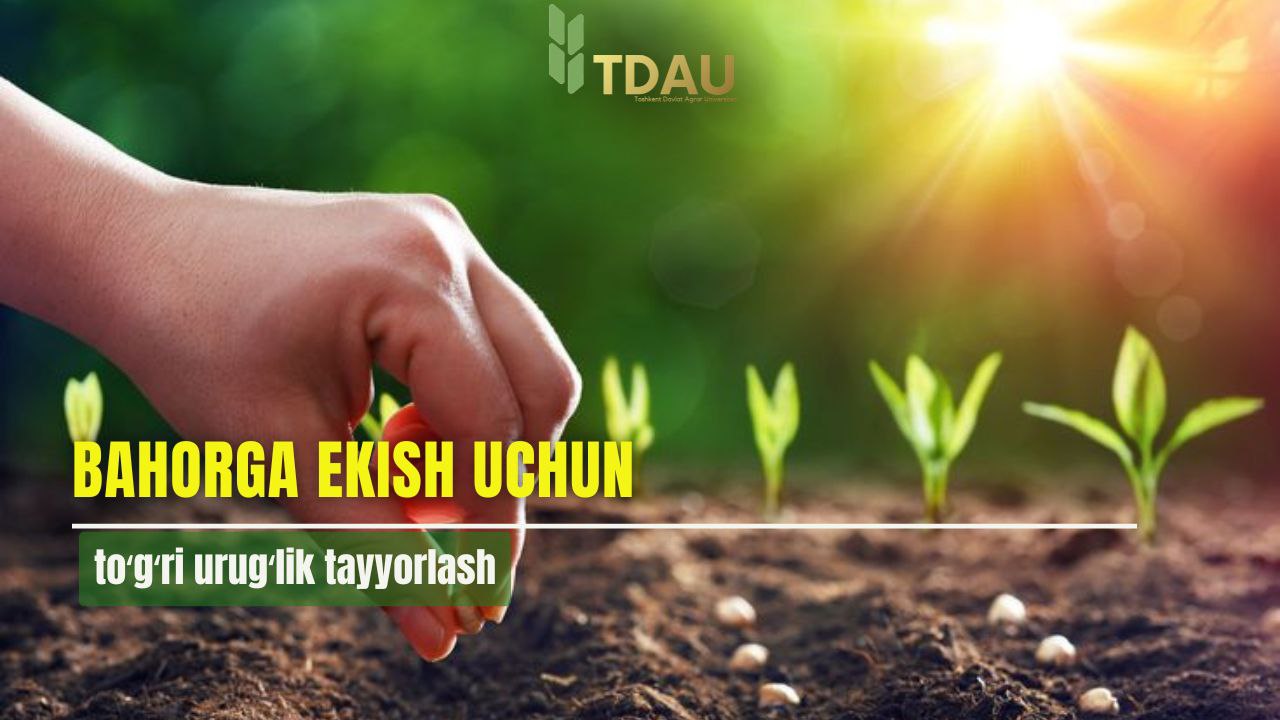
During the spring season, obtaining a high yield largely depends on the quality of the seeds used for planting. Therefore, before sowing, proper selection, preparation, and protection of seeds are considered important agricultural practices. First of all, the seeds must be of high quality, true to the variety, and have a high germination rate. Only healthy, large, fully matured, and mechanically undamaged seeds should be selected for planting. Seeds affected by diseases or pests are considered unsuitable for sowing and must be separated.
During the seed preparation process, sorting is carried out. Small, broken, and low-quality seeds are removed. Seeds that are sorted and uniform in size help ensure even germination of seedlings. In addition, seed purity is also important; they must be cleaned of foreign materials, dust, and plant residues. Before sowing, it is recommended to check the germination capacity of the seeds. For this purpose, a small amount of seeds is tested by allowing them to sprout under moist conditions. If most of the seeds germinate, they are considered suitable for sowing. If low germination is detected, the seeding rate is increased or new seeds are selected. To protect the seeds from diseases and pests, it is recommended to treat them with special protective agents before planting. This process is called seed treatment and it helps ensure the healthy development of plants in the future. Treated seeds are better protected from fungal diseases and some pests found in the soil. Proper storage of seeds before sowing is also important. Seeds should be stored in a dry, well-ventilated, and cool place. Seeds stored in places with high humidity quickly deteriorate and lose their germination ability. It is also recommended to store seeds in places protected from direct sunlight.
Social networks: