



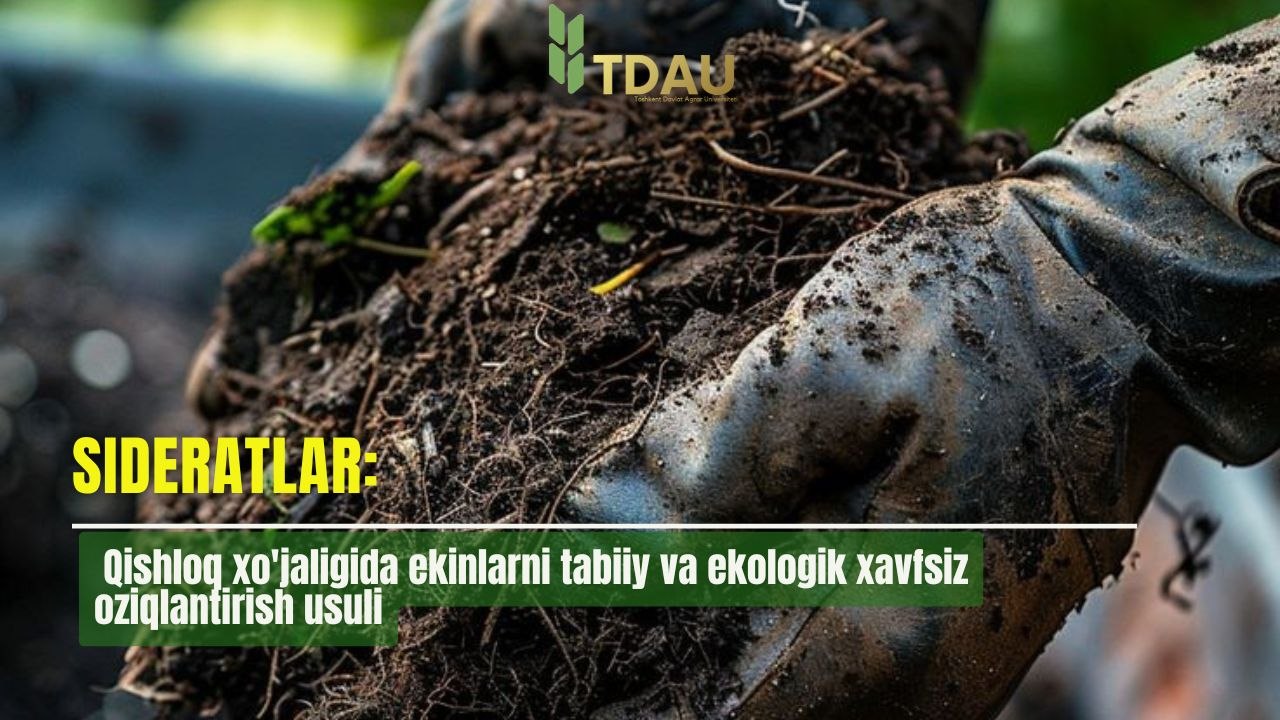
Green manures (siderates) are specific plants grown to enhance soil composition, enrich it with nutrients, and improve its structure. They are frequently used as a natural alternative to traditional mineral fertilizers.
Core Functions of Green Manures
Nitrogen Enrichment: Siderate plants, especially legumes, absorb nitrogen from the atmosphere and release it into the soil, providing a natural nitrogen source for future crops.
Structural Improvement: They increase water and air permeability and reduce soil density, creating optimal conditions for root development.
Protection and Fertility: Green manures cover the soil, protecting it from wind and water erosion. As they decompose, they produce organic matter that boosts soil fertility. Simultaneously, they suppress weeds by limiting their space and nutrient access.
Primary Plants Used as Siderates
Legumes: Peas, beans, alfalfa, soy. These are highly effective for nitrogen fixation.
Cereals: Barley, rye, oats. These improve soil structure and are effective against weeds.
Cruciferous plants: Mustard, turnip, radish. These protect the soil from pests and enrich it with micronutrients.
Application Guidelines
It is recommended to plant siderates between main crop cycles or after the harvest, typically in autumn or early spring. The plants are mowed and tilled into the soil just before or after flowering. This helps the plant matter integrate quickly and release essential minerals. Key Statistic: Incorporating 35–45 tons of organic green mass per hectare adds 150–200 kg of nitrogen to the soil. This is equivalent to 35–40 tons of manure. When manure is scarce, green fertilizers serve as a perfect substitute, often containing even higher nitrogen levels than traditional manure.
Social networks: