


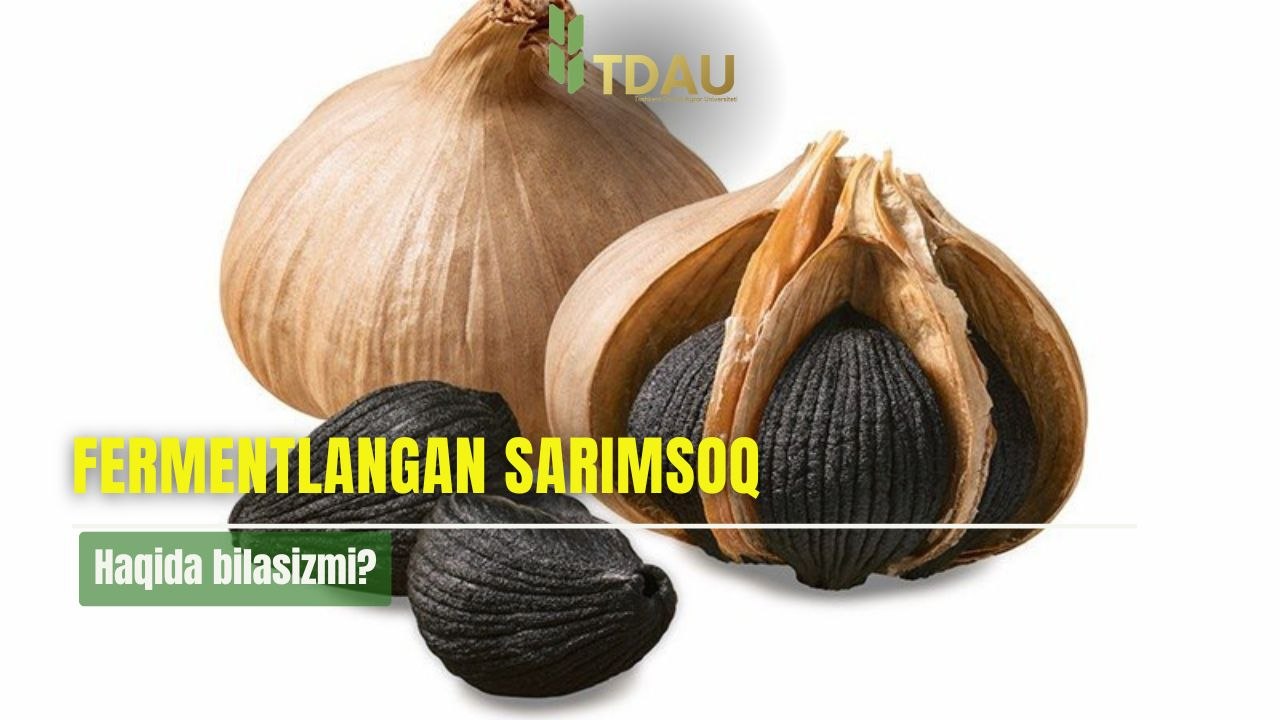
It differs from traditional fresh garlic in taste, aroma, and biochemical composition. Garlic (Allium sativum L.) has been used by humanity since ancient times as both a medicinal and food product. Through fermentation, a new product — black garlic — is obtained. During this process, the pungent taste of garlic becomes milder and turns into a sweeter, caramel-like flavor.
Biochemical composition
During fermentation, biologically active compounds in garlic change:
The amount of allicin decreases
Antioxidants (polyphenols, flavonoids) increase
Stable compounds such as S-allyl cysteine are formed
These changes increase its biological value.
Beneficial properties
Fermented garlic is considered to have the following effects:
Strong antioxidant activity
Strengthening of the immune system
Prevention of cardiovascular diseases
May help reduce the risk of cancer development
In addition, it is easier to digest compared to fresh garlic.
Application
Fermented garlic is widely used in gastronomy:
sauces and marinades
meat and fish dishes
salads
functional food products
Fermented garlic is considered an innovative product with high added value. Its nutritional and functional properties make it a promising product in the modern food industry. Further in-depth research on its biochemical mechanisms and improvement of industrial production technologies are of great importance.
Narkabulova Nargiza, PhD in Technical Sciences
Social networks: