



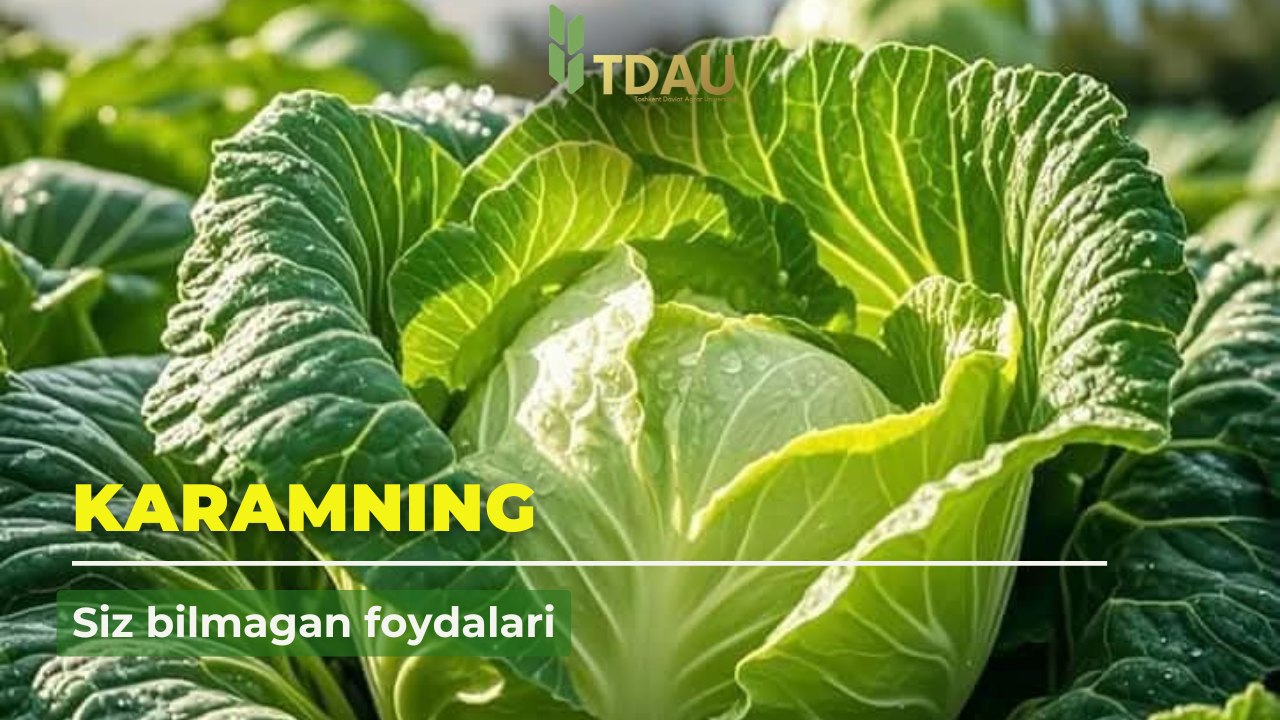
Cabbage belongs to the Brassicaceae family and is mainly a biennial plant. In the first year, it develops a strong root system, stem, and large leaves, forming a cabbage head. In the second year, a flowering stalk emerges from the core, the plant flowers, and produces seeds. The leaves are large, smooth or wrinkled, and range in color from light green to dark green, sometimes with reddish or purple tones. The cabbage head may be dense or loose, round or flat in shape.
Cabbage is a cold-tolerant plant. Its seeds begin to germinate at 2–5 °C. Seedlings can withstand temperatures down to −5 °C, while mature plants can tolerate short-term frosts of up to −8 °C. The most favorable temperature for growth and head formation is 11–18 °C. When temperatures exceed 25 °C, growth and head development slow down. Cabbage is a moisture-loving and light-loving plant and develops rapidly under moist conditions. Cabbage has very high nutritional value. It contains vitamins C, B-group vitamins, PP, K, and E, as well as carotene, folic acid, and pantothenic acid. It is also rich in minerals such as potassium, calcium, iron, and iodine. Cabbage is high in dietary fiber, which improves digestion and regulates intestinal activity. It helps remove cholesterol from the body, strengthens the immune system, and is used in traditional medicine as an anti-inflammatory and health-promoting remedy.
Social networks: