


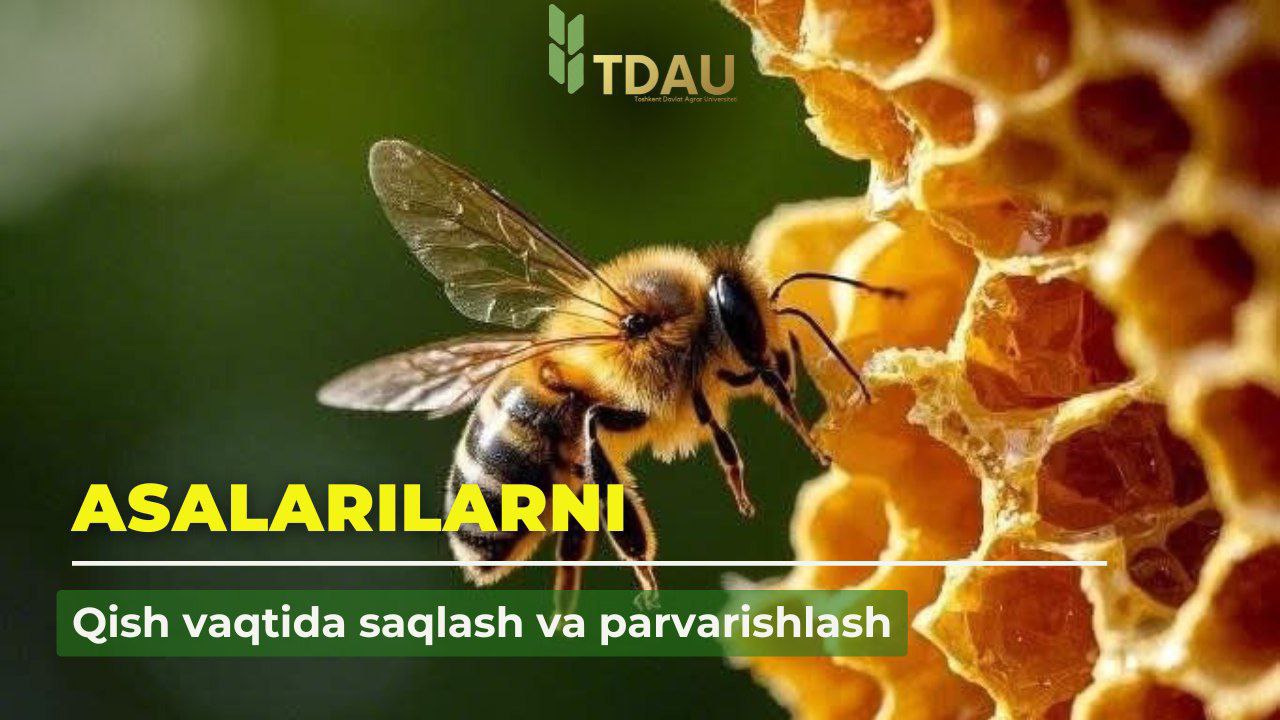
The choice of a wintering place (a winter shelter, underground wintering facility, or wintering inside the hive) depends on the climatic conditions of the region. Hives should be placed in a wind-protected, dry, and quiet location. It is necessary to avoid places exposed to direct sunlight (which may cause early overheating) or strong winds. The winter survival of bees largely depends on having sufficient and high-quality food supplies. Each strong colony should have at least 18–25 kg of quality honey for the winter period (depending on the region and colony strength). More than half of the honey should be sealed in the comb cells. Honey mixed with sugar or honey that crystallizes quickly (for example, certain types of cotton honey), which bees have difficulty processing in winter, should not be used. If honey reserves are insufficient, sugar syrup (usually in a 2:1 ratio) is provided in autumn for winter preparation. During mid-winter, additional feeding should be given only if absolutely necessary and only when temperatures rise, in the form of candy (solid sugar dough). The top and sides of the hive should be insulated with heat-retaining materials (cotton cloth, foam, thick paper). To prevent excessive moisture, minimal air exchange must be ensured through lower and upper ventilation openings (entrances). Leaving a small upper ventilation opening allows moist air to escape during wintering. During winter, bees should be disturbed as little as possible. Noise, vibrations, or light can disturb the bees, cause the cluster to break up, and disrupt wintering. At the end of winter (February–March), the number of dead bees can be assessed from the bottom of the hive without disturbing the interior. An excessive number of dead bees (more than a handful) may indicate problems during wintering. If temperatures rise sharply in mid-winter (warm days), bees become more active and consume more food, increasing the risk of food depletion. In such cases, the wintering area should be shaded or the temperature kept as stable as possible
Social networks: