

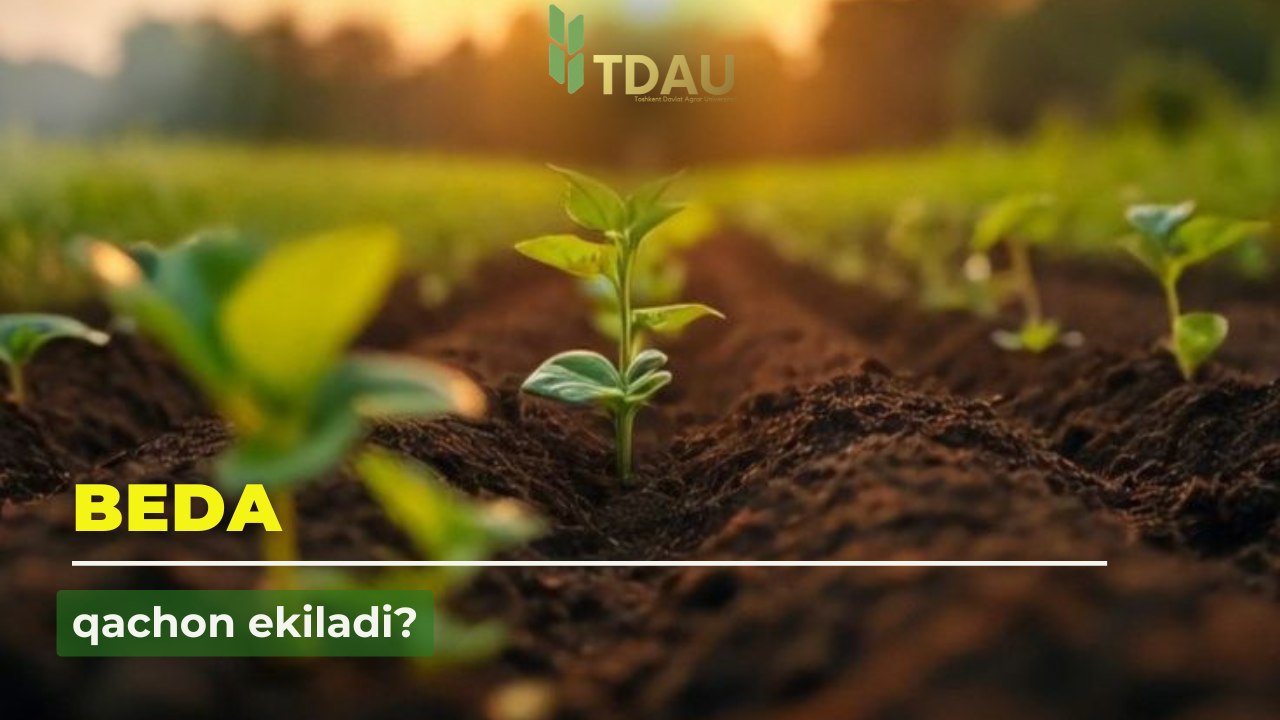
Since alfalfa seeds are very small, the weight of 1,000 seeds is 1.5–2.2 grams. The seeds must be thoroughly cleaned of weeds and quarantine plants, especially dodder seeds, have a moisture content of 13–14%, and a germination rate of at least 93–95%. For spring sowing of alfalfa, the soil is loosened in autumn to a depth of at least 15–20 cm. If machinery can be used, deep plowing is carried out to a depth of 30–40 cm. Before loosening, depending on soil conditions, it is recommended to apply 5–10 kg of manure per 1 m², phosphorus fertilizers (superphosphate, suprafos, ammophos — 100 g of pure substance per 1 m²), and potassium fertilizers (50 g of pure substance per 1 m²). Soil saturated with snow and rainwater is lightly cultivated in late February or early March. Clods are crushed to obtain a fine, loose soil structure. Alfalfa is mainly sown at two times: in early spring — late February to early March, and in autumn — late August to early September. Seeding rate: when sown in wide rows with 60 cm row spacing — 150–160 g per 100 m², and for broadcast sowing — 200 g. Sowing depth is 2–3 cm. It is not recommended to sow seeds deeper than this rate, as deeper placement makes germination difficult and results in sparse seedlings. For broadcast sowing, the soil is leveled and seeds are spread evenly. Mixing the seeds with sand helps ensure uniform distribution. It is advisable to sow by walking along and across the plot to achieve even coverage. After sowing, the soil is harrowed. Harrowing is carried out first lengthwise and then crosswise. A light roller can be made from household boards or light wood to gently compact the soil. The bed width should not exceed 60 cm; otherwise, it becomes difficult for moisture to reach the center of the bed.
Social networks: