





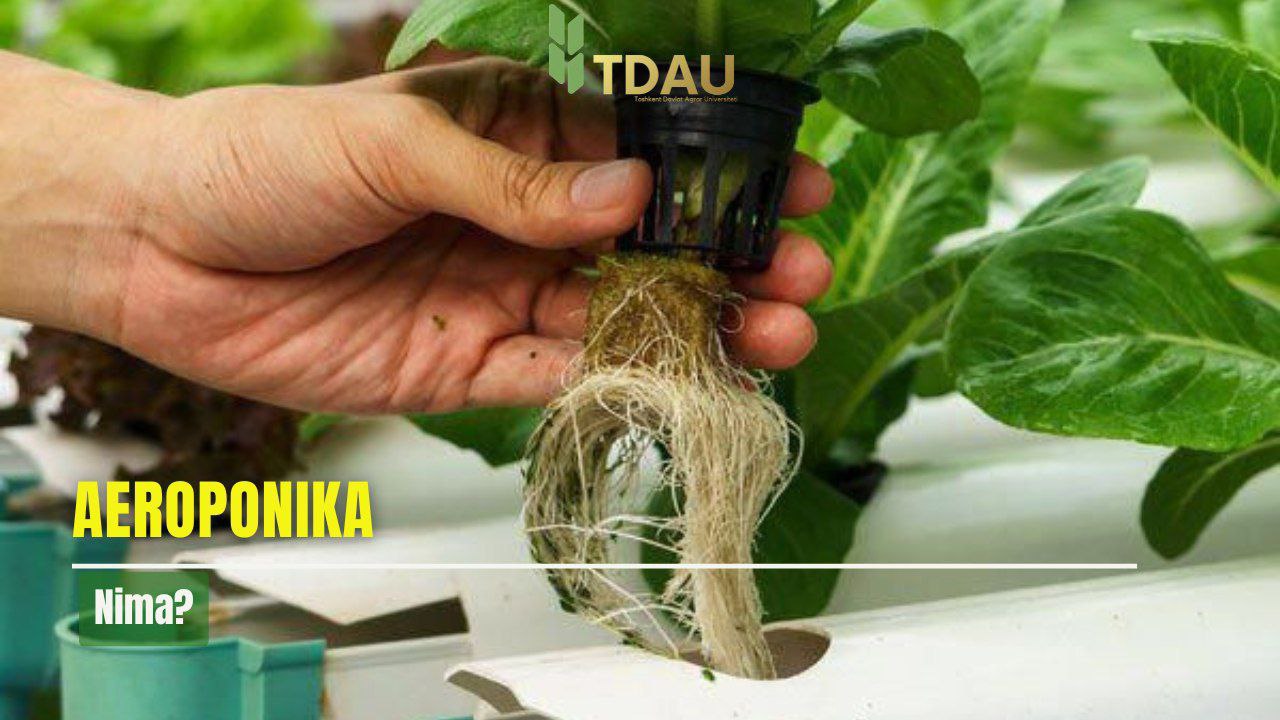
Aeroponics (derived from the Greek word aer, meaning “air”) is a method in which air serves as the medium for root nutrition. In this system, the root system of plants is placed in the dark air cavity of special containers. Nutrient solutions are periodically sprayed onto the roots using nozzles, or the roots are placed inside tubes through which the nutrient solution is periodically circulated.
Aeroponics is a soilless cultivation method in which the root system is suspended in a darkened air chamber within special racks. The plant roots are automatically sprayed with a nutrient solution for 10–15 seconds at intervals of 12–45 minutes. Aeroponics is a method of growing plants in air, where their roots are periodically misted with a nutrient solution, allowing them to grow without soil in a humid air environment. The plants are arranged on greenhouse shelves. In aeroponic greenhouses, tomatoes, cucumbers, potatoes, and other vegetables, as well as flowers and fodder crops, are grown to obtain vitamin-rich produce. With aeroponics, water and fertilizer consumption is reduced compared to soil cultivation; yields are usually higher, and vegetables ripen earlier. The possibility of growing plants by placing their roots in a humid air environment was substantiated at the end of the 19th century by Russian scientist V. M. Arsikhovsky. The method began to be applied in practice during the 1960s–1970s. Aeroponics is a method of growing plants without soil, in humid air conditions, by periodically spraying the roots with a nutrient solution. Special devices are used to spray nutrients onto the plant roots at regular intervals. The aeroponic method was proposed in 1910 by scientist V. M. Arsikhovsky for research purposes. Later, aeroponics began to be used in floriculture and vegetable production. The cultivation of root crops using aeroponics has also been developed. It is applied in greenhouses, conservatories, spacecraft, and other controlled environments.
Social networks:


