





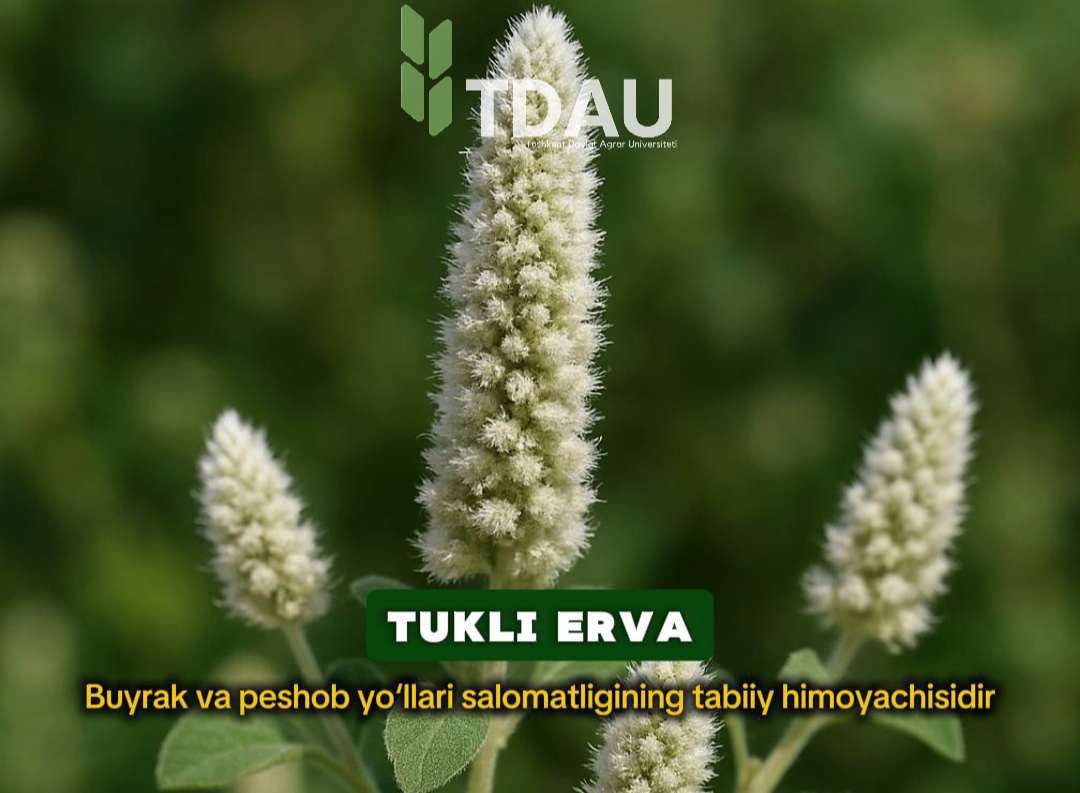
Medicinal properties:
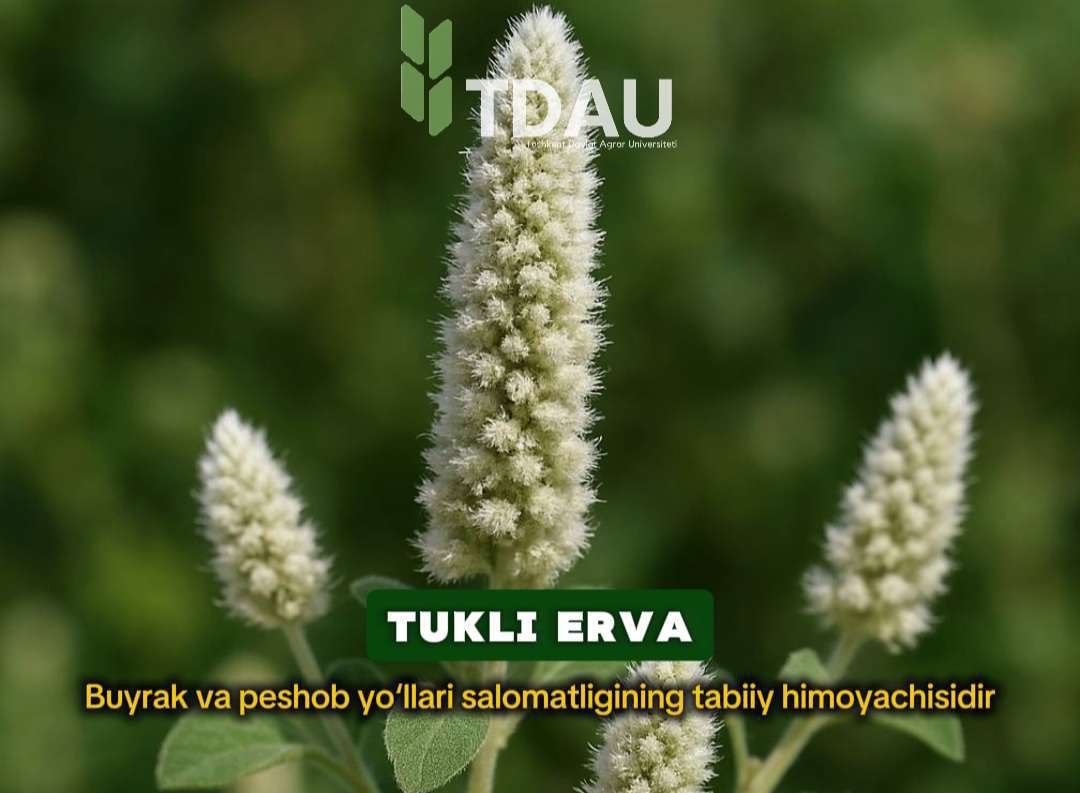
Hairy erva (Aerva lanata (L.) Juss. ex Schult.) has long been used in folk medicine as an effective remedy for kidney and urinary tract diseases. The plant has a strong diuretic effect, helping to remove excess salts and fluids from the body. It is also a natural choleretic, antispasmodic, analgesic, and anti-inflammatory remedy.
The raw material of the plant is widely used for urolithiasis, pyelonephritis, urinary tract inflammation, bladder spasms, chronic gastritis, and liver–biliary disorders. Its chemical composition includes alkaloids (indole derivatives: ervine, methylervine, ervoside, ervolanine, feruloylamide), phenolic acids, flavonoids (tyloside), acylglycosides, coumarins (tiliroside, ervitrine), triterpenes, lupeol, and oleanolic acid. These compounds help break down small kidney stones and promote their excretion with urine. Scientific name: Aerva lanata (L.) Juss. ex Schult. Commonly known as “Hairy erva,” “Pol pola,” or “Woolly Erva.” Raw material: The aerial part of the plant — Herba Aervae lanatae. Healing properties:
Strong diuretic effect; Reduces signs of kidney and urinary tract inflammation; Promotes the elimination of small stones in urolithiasis; Improves bile secretion in biliary tract disorders;
Relieves stomach spasms in chronic gastritis; Reduces edema and normalizes fluid balance; Provides mild blood pressure–lowering and calming effects.
How it is used: The aerial part is consumed as herbal tea;
Infusions are taken for kidney, urinary tract, and liver disorders;
Included in phytoproducts and dietary supplements;
In folk medicine, used to improve digestion.Notes:
Due to its strong diuretic effect, prolonged or excessive use is not recommended; Pregnant and breastfeeding women should take it only under medical supervision; People prone to hypotension should use it with caution; Not recommended for individuals with allergies or children under 3 years old. Associate Professor V.T. Qaysarov, Department of Medicinal Plants, Tashkent State Agrarian University
PhD student M.D. Dustiyorov
Social networks:


