


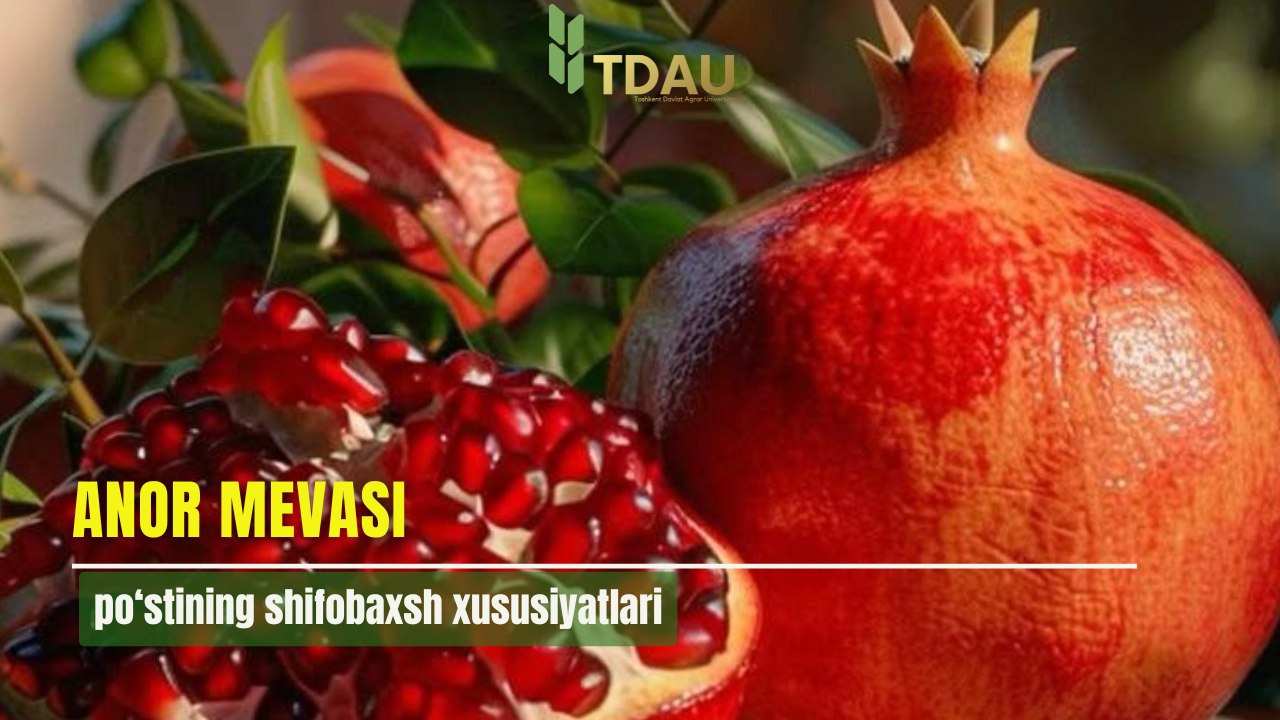
Pomegranate belongs to the pomegranate family and is a shrub that can grow up to 5 meters tall. It blooms in May–August, and its fruit ripens from September until late autumn. The fruit is spherical, multi-seeded, and juicy, rich in beneficial substances for the human body.
Pomegranate fruit contains up to 4% citric and malic acids, sugars such as fructose, glucose, and sucrose, as well as vitamin C and folic acid. Therefore, it stimulates appetite, improves digestion, strengthens the immune system, and provides energy. Pomegranate juice is beneficial in the treatment of scurvy (vitamin C deficiency) and helps eliminate vitamin deficiency in the body.
Pomegranate peel contains tannins, resins, and coloring substances. It has hemostatic, anti-inflammatory, and anthelmintic properties. A decoction of pomegranate peel is considered an effective remedy for diarrhea (dysentery). The root bark is used to expel intestinal worms. It is also applied as an ointment for bleeding gums or intestinal bleeding, as well as for wounds and injuries.
In traditional medicine, pomegranate peel, fruit, and flowers are used to treat edema (dropsy), cough, diarrhea, and certain skin diseases. The ash of dried pomegranate peels mixed with butter or animal fat helps in healing purulent skin sores.
Associate Professor S. Asatova
Department of Agrochemistry and Soil Science
Social networks: