


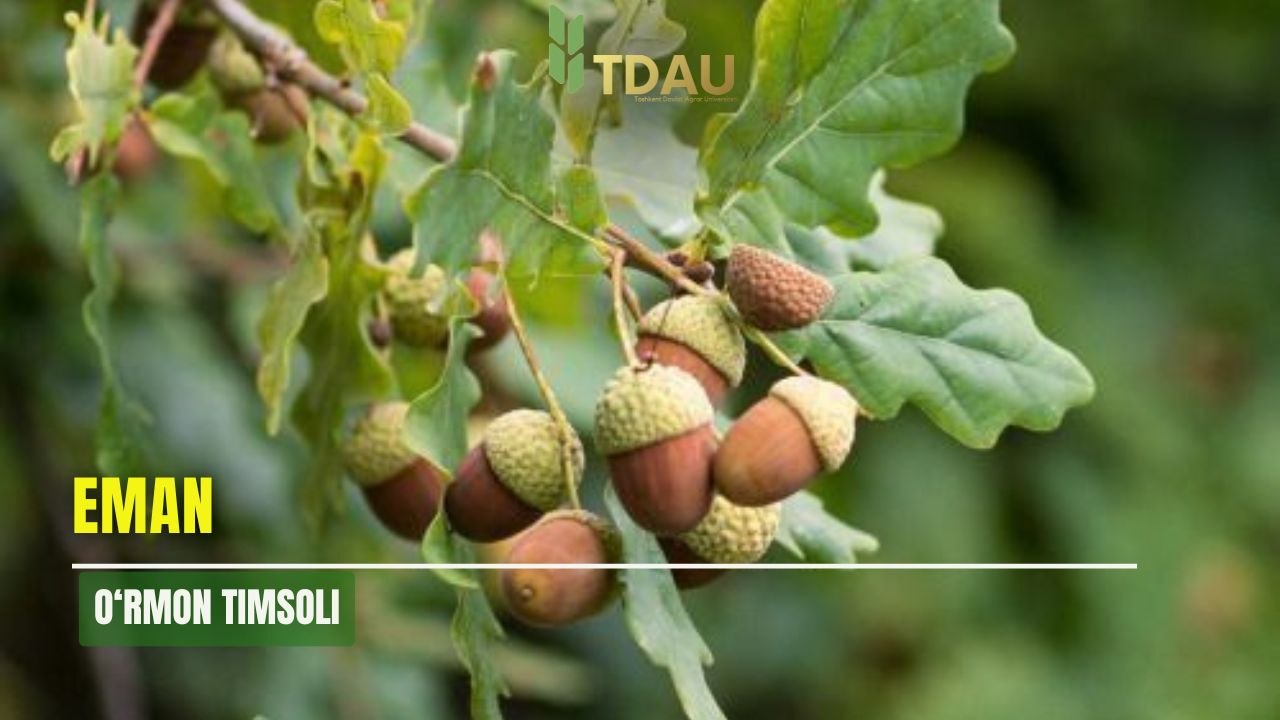
The oak tree (Quercus L.) has been considered the primary symbol of the forest for many centuries. It is a long-lived, powerful tree with a hard trunk and a broad crown, representing stability, strength, and continuity in nature. Oak plays a crucial role in forest ecosystems by stabilizing the soil, preserving biodiversity, and serving as a source of food and shelter for many animals and birds.
In many countries, the oak is revered as a national symbol. It is also widely used in landscape design and holds great importance in the greening of urban and rural areas.
Sowing Seeds and Growing Saplings
Oak seeds (acorns) belong to the group of recalcitrant seeds, meaning they cannot be dried before sowing, cannot be stored dry for long periods, and maintain their physiological activity only in a moist state. The harvesting period falls in September–October. Before sowing, they can be tested in water: mechanically undamaged, heavy, and fully ripe seeds are selected and placed in water; those that sink are considered high-quality. Seeds thrive and develop best in humus-rich soils. It is essential to pay attention to the soil condition before sowing. Oak seeds have a dormancy period. They can be sown in the ground in autumn after collection, or stored in artificial conditions in moist sand at 0…+5°C for 1–3 months. This process (stratification) increases the germination energy. Seeds are planted at a depth of 8–10 cm horizontally or with the root tip facing downward. An average of up to 500 kg of seeds is used per hectare. One- to two-year-old seedlings can be moved to the nursery section.
Social networks: